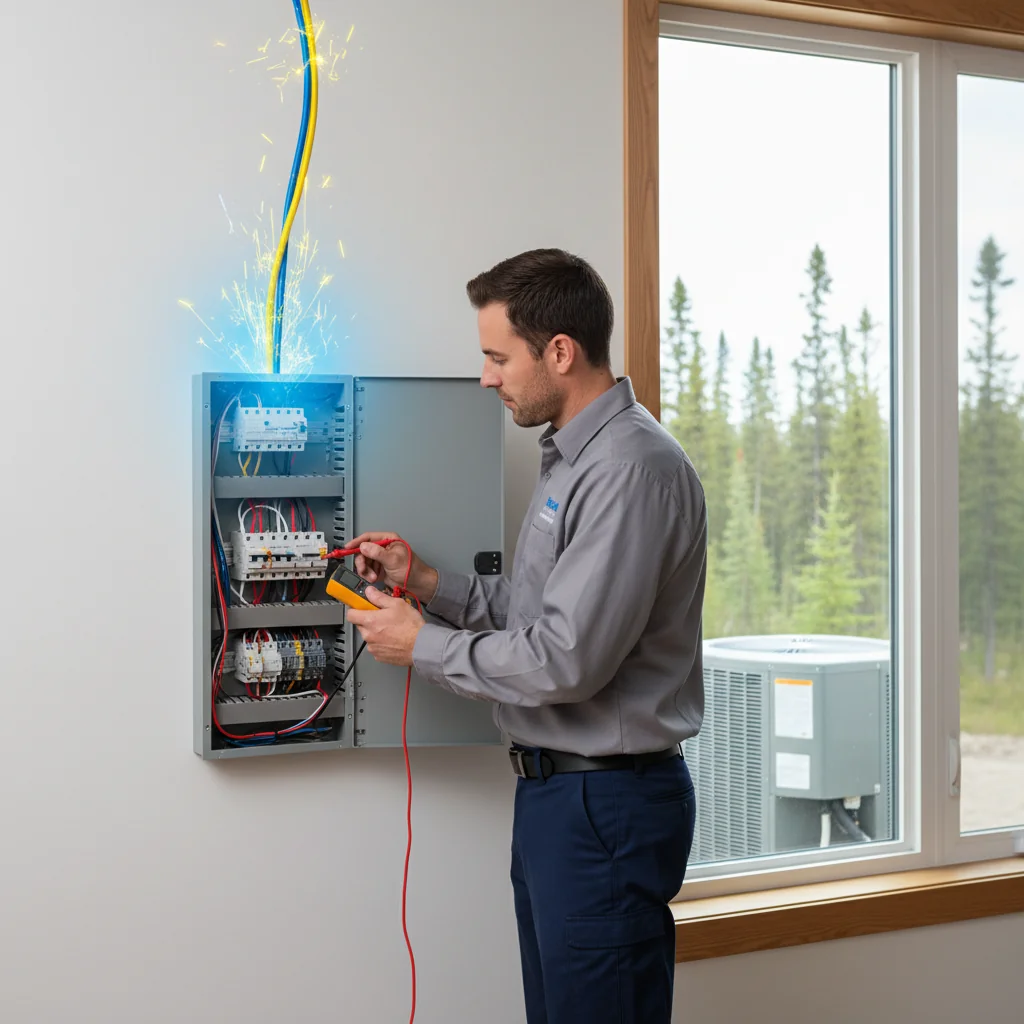
## The Essential Guide to Fort McMurray AC Wiring: Safety, Installation & Maintenance
As the summer temperatures rise in Fort McMurray, a properly functioning air conditioning system becomes less of a luxury and more of a necessity. Understanding the intricacies of Fort McMurray AC wiring is crucial for ensuring your cooling system operates safely and efficiently. This comprehensive guide from Crescent Electric will walk you through everything homeowners need to know about AC electrical connections, from installation considerations to essential safety tips and maintenance best practices.
Understanding Your AC System's Electrical Demands
Air conditioning units, especially central AC systems, are significant electrical loads in any home. They require dedicated circuits to safely draw the necessary power without overloading your home's electrical system. The size and type of your AC unit will dictate its specific wiring requirements. Typically, larger central AC units require a 240-volt circuit, while smaller window or portable units might run on standard 120-volt outlets.
Key Components of Fort McMurray AC Wiring
When discussing Fort McMurray AC wiring, several key components come into play:
Dedicated Circuit Breaker: Your AC unit must have its own circuit breaker in your electrical panel. This breaker is specifically sized to handle the AC's amperage draw and will trip to prevent damage in case of an overload or short circuit. If your home's electrical panel is older or undersized, you might require an electrical panel upgrade to accommodate a new, more powerful AC unit. Disconnect Box: Located near the outdoor condenser unit, the disconnect box provides a convenient and safe way to cut power to the unit for maintenance or emergencies. This is a critical safety feature. Appropriate Wiring Gauge: The thickness (gauge) of the electrical wire must match the amperage rating of the circuit and the distance from the electrical panel. Using wire that is too thin can lead to overheating, fire hazards, and inefficient operation. Proper Grounding: All AC wiring must be correctly grounded to protect against electrical shocks and ensure the system functions safely.
Safety First: Essential Tips for Fort McMurray AC Wiring
Electrical work, especially involving high-voltage appliances like air conditioners, should always be approached with extreme caution. Here are Crescent Electric's top safety tips:
1. Always Turn Off Power: Before inspecting or working on any part of your AC unit's electrical system, always turn off the power at the main breaker in your electrical panel and the disconnect switch near the outdoor unit. Verify power is off with a non-contact voltage tester. 2. Never Overload Circuits: Do not plug multiple high-power appliances into the same circuit as your AC unit. This can trip breakers, damage appliances, and pose a fire risk. 3. Inspect for Damage: Regularly check visible wiring for signs of wear, fraying, or rodent damage. If you notice any issues, contact a qualified electrician immediately. 4. Professional Installation is Key: For any new AC installation or significant repair involving Fort McMurray AC wiring, always hire a certified electrician. Attempting complex wiring tasks without proper training and tools can be extremely dangerous and may violate local electrical codes. Crescent Electric's team of licensed electricians in Fort McMurray, Timberlea, Thickwood, Beacon Hill, and Abasand are experts in safe and compliant AC installations.
New AC Installation and Fort McMurray AC Wiring Considerations
Installing a new air conditioning system is a significant home improvement that often involves new or upgraded electrical wiring. Here's what Crescent Electric recommends you consider:
Load Calculation: A professional electrician will perform a load calculation to ensure your home's electrical system can safely handle the additional demand of the new AC unit. This is crucial for preventing overloads. Permit Requirements: In Fort McMurray, most new electrical installations require an electrical permit application. Crescent Electric can help navigate this process to ensure your installation meets all local codes and regulations. Outdoor Unit Placement: The location of your outdoor condenser unit can impact the length and complexity of the wiring run. Consider accessibility for maintenance and protection from environmental factors. Thermostat Wiring: Modern AC systems often use smart thermostats, which might have specific wiring requirements, including a "C" wire for continuous power. If your existing thermostat wiring is outdated, a professional may need to run new wires. For those interested in home automation, a smart home installation can integrate your AC with other smart devices for ultimate comfort and energy efficiency.
Troubleshooting Common Fort McMurray AC Wiring Issues
While complex issues require professional intervention, understanding some common wiring-related problems can help you identify when to call an electrician.
AC Not Turning On: Check your circuit breaker. If it's tripped, try resetting it once. If it immediately trips again, there's a fault that needs professional diagnosis. Also, check the disconnect switch near the outdoor unit. AC Blowing Warm Air: This could be a refrigerant issue, but it could also be related to a problem with the outdoor unit's power supply. Ensure the disconnect is on and no breakers are tripped. * Burning Smell or Buzzing Sound: These are serious warning signs of an electrical problem. Immediately turn off the AC at the breaker and call Crescent Electric for an emergency service. We offer 24/7 emergency electrician services in Fort McMurray and surrounding areas.
Why Choose Crescent Electric for Your Fort McMurray AC Wiring Needs?
At Crescent Electric, we pride ourselves on delivering safe, reliable, and efficient electrical services to homeowners across Fort McMurray, including Timberlea, Thickwood, Beacon Hill, and Abasand. Our licensed and experienced electricians are experts in all aspects of Fort McMurray AC wiring, from new installations and upgrades to troubleshooting and repairs. We understand the unique demands of our local climate and are committed to ensuring your home's cooling system is up to the task.
For professional advice, safe installations, or urgent repairs related to your AC's electrical system, don't hesitate to reach out. We're here to keep your home cool and safe.
Contact Crescent Electric today for a consultation or service appointment! Phone: (587) 557-5494 Email: fortmcmurrayelectrician@gmail.com Website: Crescent Electric - Home
You can also learn more about various electrical topics on the Crescent Electric blog.
## Sizing the Dedicated AC Circuit Correctly
A modern central air-conditioning condenser in a Fort McMurray home typically draws between 15 and 35 amps of running current, with a much higher locked-rotor inrush at start-up. The Canadian Electrical Code requires the branch circuit to be sized to the unit''s nameplate Minimum Circuit Ampacity (MCA) and protected at the Maximum Overcurrent Protection (MOP) value, never above.
For most 2.5- to 4-ton residential condensers we install in Timberlea and Eagle Ridge, that means a dedicated 30A or 40A two-pole breaker feeding #10 AWG or #8 AWG copper conductors. Undersizing the wire causes voltage drop on the long runs common in two-storey homes, which makes the compressor work harder and shortens its life. Oversizing the breaker without matching the conductor is a code violation and a fire risk.
We always pull the unit''s installation manual and verify MCA/MOP against the actual run length before quoting — never rely on a generic "30 amp circuit" rule of thumb.
The Outdoor Disconnect: CEC Section 28
CEC Rule 28-604 requires a disconnecting means within sight of, and readily accessible to, the air-conditioning condenser. "Within sight" means visible and not more than 9 metres away. This is what allows an HVAC technician to safely service the unit without having to trust that someone inside the house won''t flip the breaker back on.
Crescent Electric installs heavy-duty NEMA 3R rated, lockable pull-out disconnects rated for outdoor use. These enclosures are sealed against driving rain, sleet, and the snow load that builds up against north-facing walls in Wood Buffalo. We mount the disconnect at code-compliant height on a treated backer board, and we land the conductors in liquid-tight flexible conduit so the connection at the condenser stays watertight through every freeze-thaw cycle.
Panel Capacity: Will Your Service Handle It?
Before quoting any AC installation, our electricians perform a CEC Section 8 load calculation on the existing service. Many older homes in Abasand and the original parts of Beacon Hill still have 100A service panels. Adding a 30A air conditioner on top of an existing electric range, dryer, and possibly a hot tub or EV charger can push the calculated load past the panel rating.
When that happens, an upgrade to a 200A service is almost always the right answer — not just to permit the AC, but to future-proof the home for an EV charger, heat pump, or secondary suite. Learn more on our electrical panel upgrade page. We coordinate the ATCO Electric service change, the permit, and the inspection so you have one point of contact.
Local Expert Tip: AC in a Northern Climate
> Local Expert Tip — Fort McMurray Summers: Our summers are short but increasingly intense, with daytime highs pushing into the low 30s and wildfire smoke that forces homes to stay sealed for days at a time. Properly sized AC wiring isn''t a luxury — it''s the difference between an air conditioner that limps along and one that actually keeps a Timberlea two-storey comfortable. And because the same disconnect and conductor sit through -40°C winters, every component must be specified for the full Wood Buffalo temperature range, not the milder ratings used in southern Alberta installations.
Don''t Forget the Indoor Side
The condenser is only half the install. The indoor air handler or furnace coil also needs a properly fused service, and any added blower or ECM motor draw must be added to the load calculation. We verify the furnace circuit, the thermostat C-wire, and any humidifier or HRV interlocks at the same time so the entire system commissions cleanly on the first start-up.
