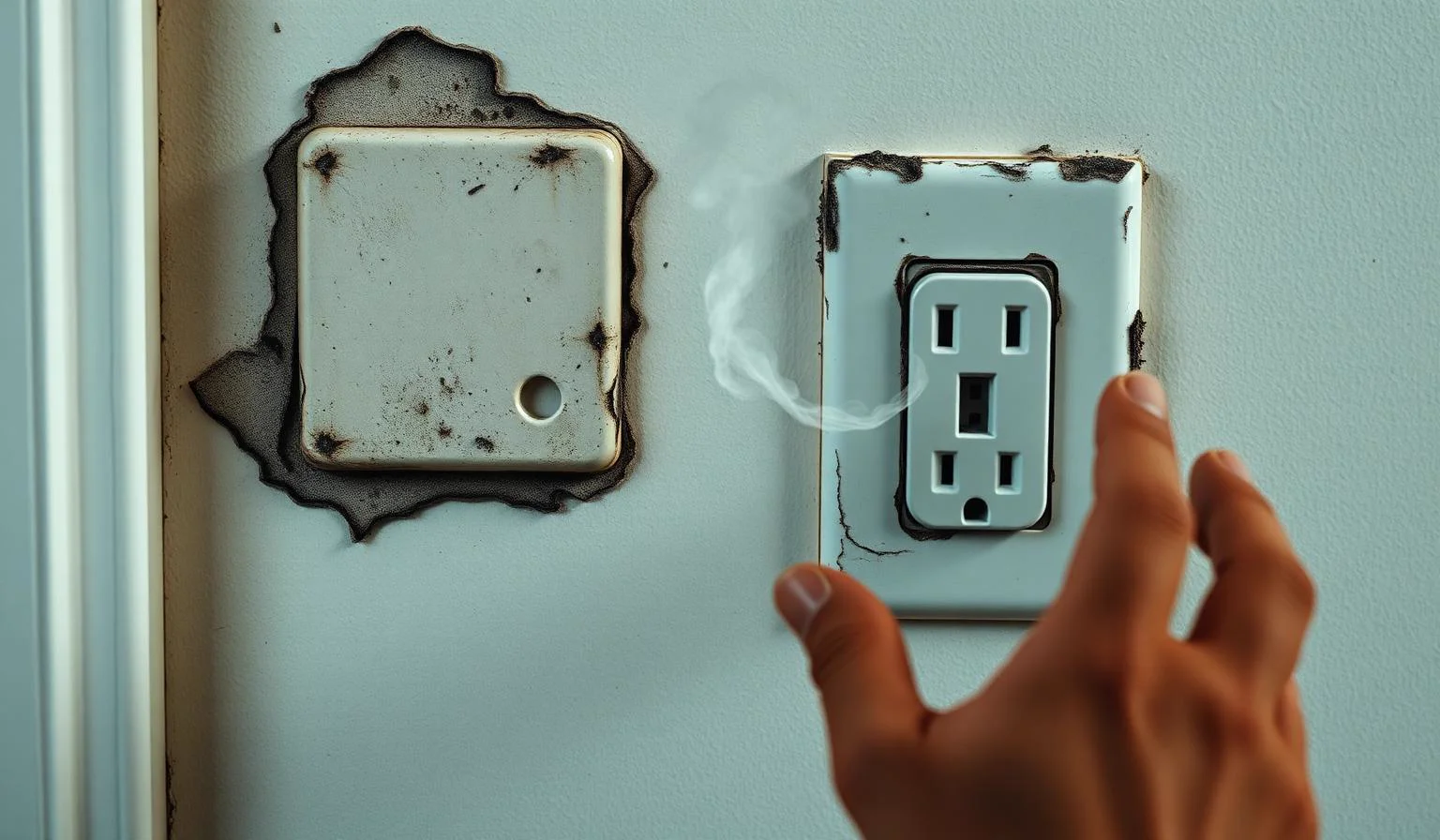
If you've ever pulled a phone charger out of the wall and noticed the outlet feels warm — or worse, hot — stop and read this. A hot outlet is one of the few electrical warning signs that gives you very little time between "noticed" and "ignited."
According to the National Fire Protection Association, electrical distribution equipment causes roughly 13% of home structure fires, and overheated outlets are near the top of the list. As a Fort McMurray Alberta Master Electrician, here's how I diagnose them.
What "Hot" Actually Means
Slightly warm (a phone charger plugged in for hours): usually normal. Transformers waste a small amount of energy as heat.
Uncomfortably warm to the touch with nothing plugged in: not normal. Stop using the outlet.
Too hot to hold a finger on, or any discoloration / brown marks around the slots: shut the breaker off immediately and call a 24/7 electrician.
1. Loose Wire Connection — The #1 Cause
Outlets in Fort McMurray homes use either screw terminals or push-in "back-stab" connections. Back-stab connections loosen over years of thermal cycling — especially in our extreme winter-summer temperature swings. A loose wire creates resistance, resistance creates heat, and heat eventually arcs and ignites the surrounding drywall paper.
The fix: The outlet must be replaced and the wires moved to the side screw terminals (or pigtailed with a wire nut). This is a 30-minute job for a licensed electrician — not a DIY repair.
2. Overloaded Outlet
Power strips daisy-chained from a single 15-amp outlet running a space heater, gaming PC, monitor, and electric kettle will absolutely cook the receptacle. Fort McMurray winters make this common in home offices and basement suites.
The fix: Move high-draw appliances to a dedicated circuit. Never plug a space heater into a power strip — they're rated for low-draw electronics only.
3. Aluminum Wiring
If your home was built between roughly 1965 and 1975, you may have aluminum branch wiring. Aluminum has a different expansion rate than the brass/copper of standard outlets and develops oxidation at the connection point — the perfect recipe for a hot outlet. Aluminum-rated (CO/ALR) devices and proper anti-oxidant compound are required by code.
4. Damaged or Worn-Out Receptacle
Outlets are rated for roughly 5,000 plug/unplug cycles. After that, the internal contacts lose grip and arc against the plug blades each time the load fluctuates. If your plug falls out or wiggles loosely, the outlet is done — and it's running hot whether you can feel it yet or not.
5. Wrong Wire Gauge for the Breaker
I see this in DIY-renovated basements regularly: a 20-amp breaker feeding 14-gauge wire (which is rated for 15 amps only). The wire heats up before the breaker ever notices. This is a code violation, an insurance liability, and a fire hazard. A proper electrical inspection will catch it.
What to Do Right Now
- Unplug everything from the outlet.
- Turn off the breaker that feeds it.
- Don't use the outlet again until a licensed electrician has inspected it.
- If you smell burning plastic or see scorch marks, treat it as an active fire risk — call 911 first if there's smoke, then us.
Frequently Asked Questions
Can a hot outlet really start a fire?
Yes — and it's one of the most common ignition points for residential electrical fires. The heat builds slowly inside the wall cavity and ignites drywall paper or insulation long before you smell smoke.
Why is only one outlet in my house hot?
Almost always a loose connection at that specific receptacle, or a damaged outlet at end of its service life. The good news: it's an inexpensive fix once a licensed electrician traces the cause.
Should I just replace the outlet myself?
No. Alberta Electrical Code requires permitted, licensed work on receptacles tied to fault conditions. Insurance will deny a claim on DIY repairs, and you have no way to confirm whether the wire upstream is also damaged.
How much does Crescent Electric charge to fix a hot outlet?
Flat $150 dispatch and diagnostic. A simple receptacle replacement is typically completed within the first hour at the standard $120–$140/hr labour rate. Aluminum-wiring repairs run higher because of the specialty connectors required.
How do I prevent outlets from overheating in the future?
Don't plug high-draw appliances (heaters, AC, kettles) into power strips. Replace any outlet where plugs feel loose. If your home is over 30 years old, schedule a one-time whole-home electrical inspection — most issues are invisible until they fail.
Smell something burning or see scorch marks? Don't wait. Call Crescent Electric at (587) 557-5494 for 24/7 emergency service across Fort McMurray.
