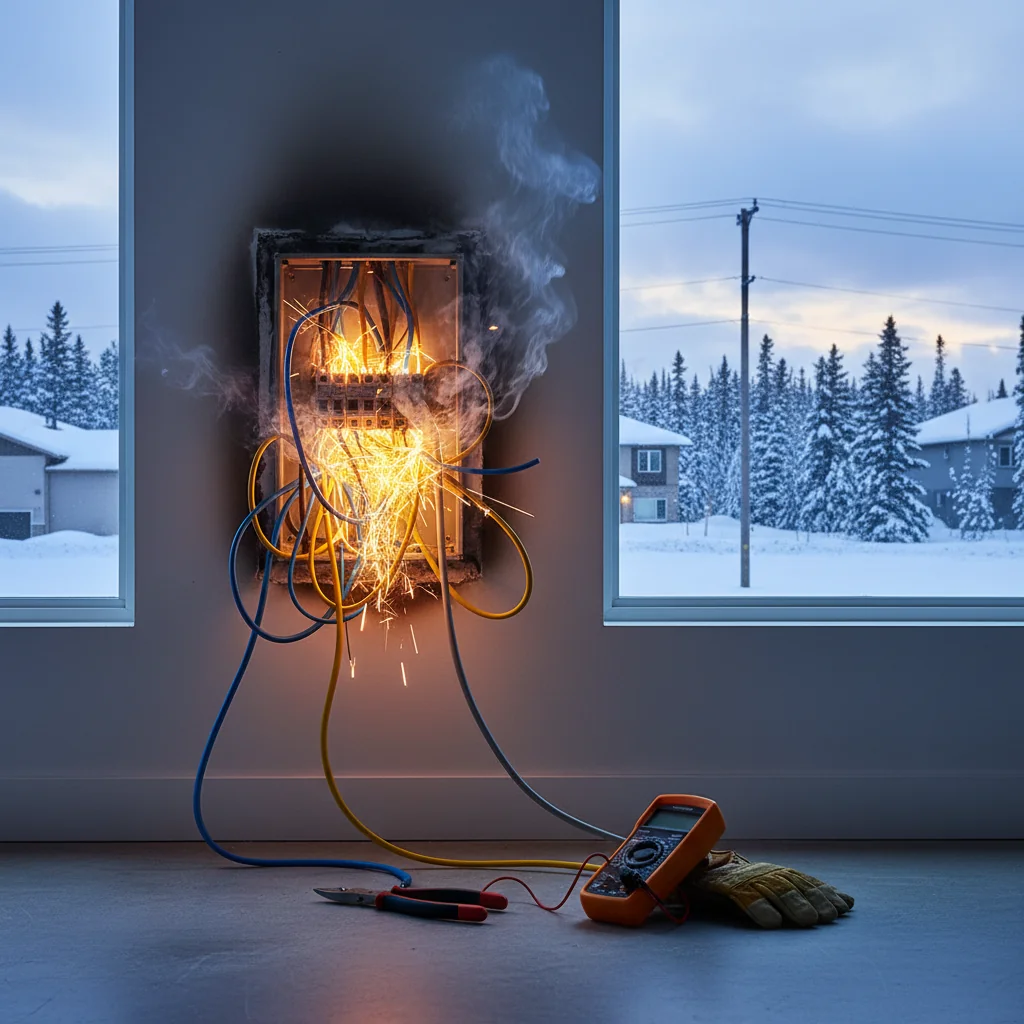
At Crescent Electric, we're dedicated to essential electrical safety for Fort McMurray homes and the well-being of every homeowner we serve. One of the most common yet often overlooked hazards in Fort McMurray homes is an overloaded circuit. Understanding the dangers of an overloaded circuit is essential electrical safety knowledge that helps prevent electrical fires and keeps your home's wiring operating safely and efficiently.
Recognizing the Signs of an Overloaded Circuit
The first step in preventing the dangers of an overloaded circuit is knowing how to identify them. Are your lights flickering when you turn on an appliance? Do your circuit breakers trip frequently? These are clear indicators that a particular circuit might be handling more power than it's designed for. Pay attention to warm outlets or switch plates, and any burning smells. These are serious warnings of the dangers of an overloaded circuit that should not be ignored.
Preventing the Dangers of an Overloaded Circuit with Smart Appliance Use
Many modern homes in Fort McMurray, especially in areas like Timberlea and Thickwood, have numerous high-power appliances. To avoid the dangers of an overloaded circuit, distribute your appliances across different circuits. Avoid plugging multiple large appliances, such as space heaters, microwaves, and toasters, into the same outlet or power strip. This simple practice can significantly reduce the risk of an overloaded circuit.
When to Call Crescent Electric: Addressing the Dangers of an Overloaded Circuit
If you're consistently experiencing tripped breakers or suspect you have an overloaded circuit, it's time to call in the professionals. Attempting to "fix" an overloaded circuit yourself can be incredibly dangerous. Our certified electricians at Crescent Electric are experts in diagnosing and resolving the dangers of an overloaded circuit throughout Fort McMurray, Beacon Hill, Abasand, and surrounding areas. We can assess your home's electrical panel, identify problem areas, and recommend safe, effective solutions to prevent future issues.
Don't Underestimate the Dangers of an Overloaded Circuit – Contact Crescent Electric Today!
The dangers of an overloaded circuit are real and can lead to serious consequences, including electrical fires and damage to your appliances. Don't take chances with your family's safety. For reliable electrical assessments and solutions in Fort McMurray, contact Crescent Electric. Our team is ready to help you ensure your home's electrical system is safe and up to code.
Call us today at (587) 557-5494 or email us at fortmcmurrayelectrician@gmail.com to schedule an appointment. Visit our website at Crescent Electric - Home for more information on our services. Your safety is our priority!
## The Winter Block Heater Surge
Fort McMurray winters are brutal on the electrical grid — and on the panel inside your home. At -35°C, every diesel and gas vehicle in the driveway needs a block heater (typically 600W–1200W each), every set of pipes against an exterior wall needs heat-tape (3–8W per foot), and every front porch is decorated with holiday lights or pathway lighting (200–500W per run). When two trucks, heat-tape, and a string of LEDs all share the same outdoor 15A circuit, you are operating dangerously close to — or above — the 80% continuous-load rule required by CEC Rule 8-104.
Here is the wattage math homeowners need to understand:
- 15-amp circuit at 120V = 1,800W maximum instantaneous capacity
- Continuous load limit (80% rule) = 1,440W safe sustained load
- Two block heaters @ 1,000W each = 2,000W → already over breaker rating
- Add 200W of heat tape → tripped breaker, melted receptacle, or worse
> Pro Tip — Thickwood & Abasand: Older homes in these neighborhoods often share the entire exterior of the house on a single 15A GFCI circuit. We recommend dedicating a separate 20A GFCI/WR receptacle for each parking stall, fed from its own breaker in the panel.
Space Heaters: The Silent Circuit Killer
A 1500W portable space heater is the single most common cause of overloaded bedroom and living-room circuits in Fort McMurray. Plugged into a bedroom outlet that is already shared with a computer (300W), a TV (150W), a phone charger, and a lamp, the circuit is now carrying roughly 2,000W on a 15A breaker rated for 1,800W instantaneous and 1,440W continuous. The result is one of three failure modes:
- The breaker trips (best case — the safety system worked)
- The receptacle overheats and melts (the back-stab connections are the weakest link)
- The wire insulation degrades inside the wall (the worst case — invisible until a fire)
The CEC defines a space heater as a continuous load, which means it must not exceed 80% of the circuit rating on its own — let alone share the circuit with anything else. The proper fix is a dedicated 20A circuit for any room where a portable heater is used regularly, or better yet, a permanently installed baseboard heater on its own 240V circuit controlled by a line-voltage thermostat.
Warning Signs of a Stressed System
You do not have to wait for a breaker to trip to know your system is overloaded. Watch for these red flags:
- Lights flicker or dim when the furnace, dryer, or A/C kicks on — indicates a loaded neutral or undersized service feeder
- Receptacles or switch plates feel warm to the touch — heat = resistance = imminent failure
- Breakers feel warm or buzz audibly — failing breaker contacts or loose bus connections
- Burning plastic smell near outlets — stop, unplug, and call a Master Electrician immediately
- Aluminum wiring discoloration at receptacle screws — see our aluminum wiring article for the remediation path
> Pro Tip — Timberlea & Stone Creek: If your home was built between 1995 and 2005 and you have noticed flickering when the heat pump or A/C cycles, the issue is often a loose lug at the meter base — a weather-driven failure unique to our -40°C to +30°C annual temperature swing. This is a no-charge inspection item on any panel service call.
CEC Section 8 Load Calculations
Every Fort McMurray homeowner adding an EV charger, hot tub, or air conditioner is required by CEC Rule 8-200 to have a calculated load performed by a licensed electrician. The calculation accounts for the basic load (5kVA for the first 90m² + 1kVA per additional 90m²), heating, A/C, range, dryer, EV, and any additional 1,500W+ loads. If the calculated demand exceeds 80% of the service rating, an upgrade is mandatory — not optional.
RELATED TOPICS:
