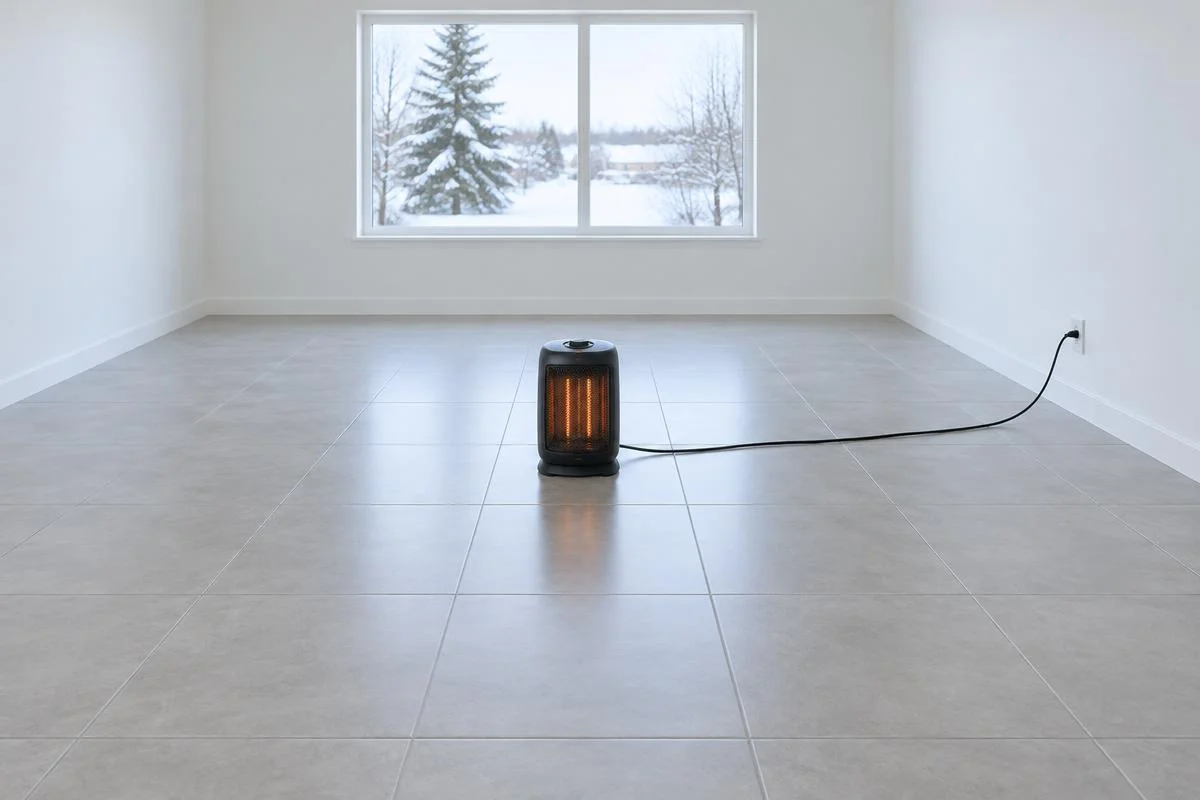
A portable electric heater can make a chilly room more comfortable during a Fort McMurray winter, but it should not become a workaround for a damaged outlet or an overloaded circuit. Before switching one on, check the appliance instructions and the condition of the place where you plan to use it.
Choose a certified heater and a clear location
Look for a Canadian certification mark, such as CSA, cUL or cETL, and follow the manufacturer's instructions. Check the cord, plug and casing for damage. Do not use a unit with a damaged cord, missing parts or a product recall that has not been resolved.
Place the heater on a stable, level surface where it cannot be knocked over. Keep at least one metre of space between it and furniture, curtains, bedding and other objects, and follow any greater clearance required by the manufacturer. Keep children and pets away. Choose a model with a tip-over shutoff, but do not treat that feature as a replacement for supervision.
Plug it directly into a suitable wall outlet
Plug a portable heater directly into a wall receptacle. Do not connect it through an extension cord, power bar or multi-outlet adapter. Keep the original cord visible and out from under rugs, doors and furniture. Do not use a loose outlet that cannot hold the plug securely.
A typical 1,500-watt heater draws about 12.5 amps at 120 volts. Other outlets in the room may share the same circuit, so moving the heater to the next receptacle does not necessarily reduce the electrical load. Avoid running other high-power appliances on that circuit at the same time.
Do not ignore heat or repeated breaker trips
If you notice a hot plug, discoloured receptacle, burning smell, sparking or repeated breaker trips, stop using the heater. Switch it off and disconnect it only if it is safe to do so. Do not repeatedly reset the breaker, replace it with a larger breaker or open the panel to investigate yourself.
These signs can indicate an overloaded circuit or a connection problem that needs assessment. If there is smoke or fire, leave the building and call 911. For a non-fire electrical concern, arrange an inspection before using that outlet again.
Switch it off when you leave or sleep
Turn the heater off before leaving the room or going to bed. Keep working smoke alarms in the home and test them according to their instructions. Portable heaters are intended for temporary supplemental warmth, not as a permanent replacement for a properly installed heating system.
When a permanent solution makes more sense
If the same room is cold every day, investigate the cause rather than adding more portable heaters. Crescent Electric can assess the circuit and discuss appropriate electrical heating or a dedicated circuit where needed. The right approach depends on the existing wiring, available capacity and the intended appliance.
Arrange an electrical repair assessment or contact Crescent Electric to discuss a recurring concern.
Safety sources
This general guidance draws on Health Canada's electrical product safety advice and Quebec's portable electric heating fire-prevention guidance. Follow the instructions for your specific heater; this article does not replace an on-site electrical assessment.
Article illustration is AI-generated and is not a photograph of a Crescent Electric customer project.
RELATED TOPICS:
