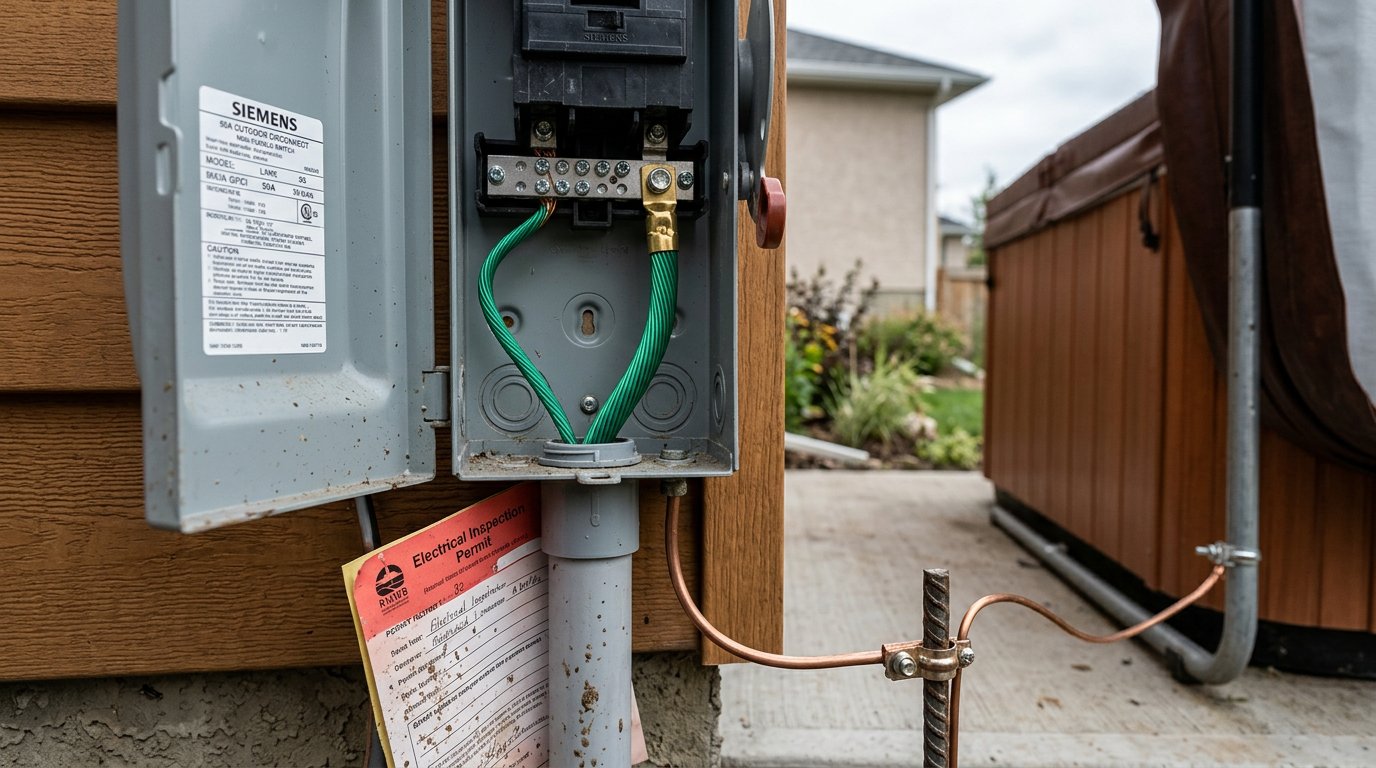
There is nothing quite like sliding into a steaming, bubbling hot tub after a long, grueling 12-hour shift out at the oil sands mines. For many shift workers living in communities like Timberlea, Thickwood, and Eagle Ridge, a backyard spa is the ultimate way to unwind. However, installing a hot tub in the Regional Municipality of Wood Buffalo is not as simple as dropping it onto a concrete pad, plugging it into an outdoor outlet, and filling it with a garden hose. Because water and high-voltage electricity are a highly volatile combination, the electrical installation of a hot tub is strictly regulated.
To ensure your home, family, and guests remain safe, you must navigate a rigorous process involving municipal permits, strict bonding guidelines, and heavy-duty trenching requirements. As an Alberta Master Electrician who has spent over 12 years working in the unique climatic conditions of Fort McMurray, I have seen first-hand what happens when hot tub wiring is rushed or done incorrectly. From frozen pipes during a -40°C winter cold snap to dangerous electrical shocks due to poor bonding, the stakes are incredibly high. In this comprehensive guide, we will break down the essential steps to secure your hot tub permit in Alberta, comply with the Canadian Electrical Code, and complete your installation safely.
Why is a hot tub permit in Alberta legally required?
Many homeowners wonder if they can bypass the paperwork when installing a hot tub. The short answer is no. Under the Alberta Safety Codes Act, any new electrical installation—including running a new 240-volt circuit for an outdoor hot tub—requires an electrical permit. This legislation is in place to protect homeowners, ensure compliance with the Canadian Electrical Code, and verify that all installations are inspected by an authorized safety codes officer.
When you hire a contractor for professional hot tub wiring, pulling a permit is a non-negotiable step. In the Regional Municipality of Wood Buffalo, unpermitted electrical work can lead to severe consequences, including:
- Voided Home Insurance: If an electrical fire or water leak causes damage to your property and the insurance company discovers the hot tub was wired without a permit, they have the legal right to deny your claim.
- Municipal Fines: Building inspectors can issue stop-work orders or levy significant fines against homeowners who undertake unpermitted electrical or structural work.
- Property Sale Issues: When you eventually decide to sell your home in neighbourhoods like Parsons Creek or Abasand, home inspectors will look for permits for major additions like hot tubs. Unpermitted work can stall a sale or force you to pay for expensive corrective work.
The permit process ensures that an independent safety codes officer reviews the final work. They will verify that the wire size is correct, the trench is deep enough, the GFCI protection works instantly, and the metal structures surrounding the tub are properly bonded. By securing your hot tub permit in Alberta, you are investing in peace of mind.
What are the Canadian Electrical Code bonding rules for outdoor spas?
Bonding is one of the most critical, yet frequently misunderstood, aspects of hot tub installation. To understand bonding, we must first distinguish it from grounding. Grounding provides a safe path for fault current to return to the earth, protecting your system from surges and lighting. Bonding, on the other hand, connects all non-current-carrying metal parts together to ensure they are at the exact same electrical potential. This prevents a person from touching two different metal objects and becoming the path for electrical current.
According to the Canadian Electrical Code, specifically the Rule 10-700 series, bonding is mandatory for any conductive metal parts near an outdoor pool, hot tub, or spa. Here are the core rules we must follow:
The 3-Meter Perimeter Rule
Any metallic object within 3 meters (approximately 10 feet) of the inside wall of the hot tub must be bonded together using a minimum #6 AWG copper conductor. This includes metal fences, metallic deck railings, structural steel, metal siding on your house, and even metal window frames. If a fault occurs in the hot tub's electrical system, these nearby metal objects could carry a voltage. If a wet bather steps out of the tub and touches an unbonded metal railing, the resulting electric shock could be fatal.
Equipotential Bonding Plane
In wet environments, concrete pads or pavers can actually conduct electricity. To mitigate this risk, modern electrical standards often require an equipotential bonding plane under and around the hot tub. This involves installing a wire mesh or grid within or directly beneath the concrete pad and bonding it to the hot tub's grounding terminal. This ensures that the ground you stand on is at the same voltage potential as the water and the tub itself, eliminating the risk of step-and-touch voltage shocks.
Equipment Markings and Approval
All bonding clamps, lugs, and conduits must carry approved markings under Rule 2-024. This ensures they are rated for wet environments and direct burial. Cheap, unapproved components from online retailers will quickly corrode in our humid, chemical-laden spa environments, rendering your bonding system useless within a couple of seasons.
How do we size the electrical panel for a hot tub in Wood Buffalo?
Before you purchase that beautiful new 6-person spa, you need to verify if your existing electrical panel can handle the massive load. Most modern residential hot tubs draw between 40 and 50 amps at 240 volts. This is a significant load that must be carefully calculated before installation begins.
Under the Canadian Electrical Code, we must evaluate the home's electrical service using specific load calculations. We look closely at:
- Rule 8-104: This rule governs continuous loads. A hot tub heater and its multiple pumps run continuously for hours at a time. Therefore, we must ensure the continuous load does not exceed 80% of the rating of the overcurrent device, or 100% if specifically rated for continuous operation.
- Rule 14-104: This rule dictates the rating of our overcurrent devices (breakers). We must use a precisely sized double-pole breaker (usually 50A or 60A) in your main panel to protect the feeder conductors.
In older Fort McMurray neighbourhoods like Beacon Hill and portions of Thickwood, many homes still operate on 100-amp electrical services. If you already have an electric range, a clothes dryer, and perhaps an air conditioner or a home workshop, adding a 50-amp hot tub will easily overload a 100-amp panel. If you try to run your hot tub while cooking dinner, you will likely find your main breaker tripping. To avoid this, you may need an electrical panel upgrade to a 200-amp service, which provides the necessary headroom for modern high-draw appliances.
Additionally, we must cross-reference this with other major loads. If you have recently installed an EV charger under the rules of Section 86, or are planning to do so in the future, a comprehensive load calculation is absolutely vital. Reviewing our electrical panel upgrade guide can help you understand whether your home is ready for this added electrical demand.
What are the physical installation and trenching requirements?
Once we have confirmed your panel capacity and secured the necessary permits, the physical installation begins. This involves routing heavy-duty conductors from your main electrical panel, through an outdoor GFCI disconnect switch, and finally to the hot tub pack.
The GFCI Disconnect Switch (Spa Pack)
The Canadian Electrical Code mandates that an outdoor hot tub must be protected by a Class A ground fault circuit interrupter (GFCI). This is typically housed in a weatherproof enclosure, often referred to as a "spa pack." Under Rule 26-700 / 26-722 / 26-724, these protective devices must be installed to guard against ground faults in wet locations. The spa pack must be located:
- At least 3 meters away from the water's edge to prevent a bather from touching the switch while still in the water.
- Within line-of-sight of the hot tub, so that any service technician or occupant can quickly cut power to the unit in an emergency.
We highly recommend utilizing premium enclosures and breakers from trusted manufacturers such as Siemens, Eaton, Square D, Schneider Electric, or Leviton to ensure reliable operation in our extreme climate.
Trenching and Conduit Requirements
To run the wiring from your home to an island deck or a pad in the middle of your yard, we must trench. The depth of this trench is strictly regulated by the Alberta Electrical STANDATA and the Canadian Electrical Code. If we are running PVC conduit containing individual conductors, the trench must be at least 450 mm (18 inches) deep. If we are using direct-burial NMWU cable, the depth must be at least 600 mm (24 inches). In areas subject to vehicular traffic (such as a driveway or parking pad), the trench must be dug even deeper.
Before any shovel hits the dirt in Wood Buffalo, you must contact Utility Safety Partners (formerly Click Before You Dig) to locate and mark all underground utilities. Accidentally hitting a gas line or an underground electrical feed in a crowded area like Timberlea can be incredibly dangerous and costly.
Why do hot tub breakers trip in -40°C winter conditions?
Fort McMurray is famous for its brutal winter weather, where temperatures routinely plunge below -40°C. These extreme temperatures put immense stress on electrical systems, and hot tubs are particularly vulnerable. A tripping breaker in the dead of winter is not just an inconvenience—it is a genuine emergency. If a hot tub loses power in sub-zero temperatures, the water can freeze within hours, cracking the plumbing, ruining the pumps, and causing thousands of dollars in damages.
There are several common reasons why your hot tub breaker might trip during a cold snap:
- Moisture Ingress in the Spa Pack: Extreme temperature fluctuations cause condensation to form inside the outdoor disconnect enclosure. When this moisture drips onto the GFCI breaker, it detects a minor ground fault and trips instantly. This is why high-quality, perfectly sealed enclosures are non-negotiable.
- Heater Element Failure: In the winter, your hot tub heater must work overtime to maintain a temperature of 40°C (104°F) against a -40°C ambient temperature. This continuous operation can cause the heating element casing to crack, allowing water to come into contact with the electrical filament. If this happens, your GFCI will trip immediately to protect you from shock. If you are experiencing this, you can learn more about diagnostics in our guide on why your breaker keeps tripping.
- Pump Seizure: If a pump motor bearing begins to fail or freezes due to minor ice buildup, the motor will draw excess current to try and turn. This overcurrent will trigger the thermal protection on the breaker under Rule 14-104.
For oil sands shift workers who may be away from home for several days at a time, we highly recommend installing a smart monitoring system or having a neighbor check on the hot tub during extreme cold spells. If your tub does lose power in the winter, you must act fast. Call an emergency electrician in Fort McMurray immediately to diagnose the issue before the water freezes solid. Practicing proper winter electrical safety is the key to protecting your outdoor investments.
Disclaimer: Always pull the required electrical permit and hire a licensed electrician. This work falls under the Alberta Safety Codes Act and must comply with municipal safety rules.
About the Author
Mohammad is an Alberta Master Electrician (License #8368) and Red Seal certified electrical professional with over 12 years of hands-on experience serving the Wood Buffalo region. Specializing in residential and commercial installations, Mohammad has wired hundreds of hot tubs, EV chargers, and service upgrades across Timberlea, Thickwood, and the surrounding communities. Known for his technical precision and deep understanding of the Canadian Electrical Code, he is dedicated to keeping Fort McMurray homes safe, compliant, and ready to withstand the toughest northern winters.
