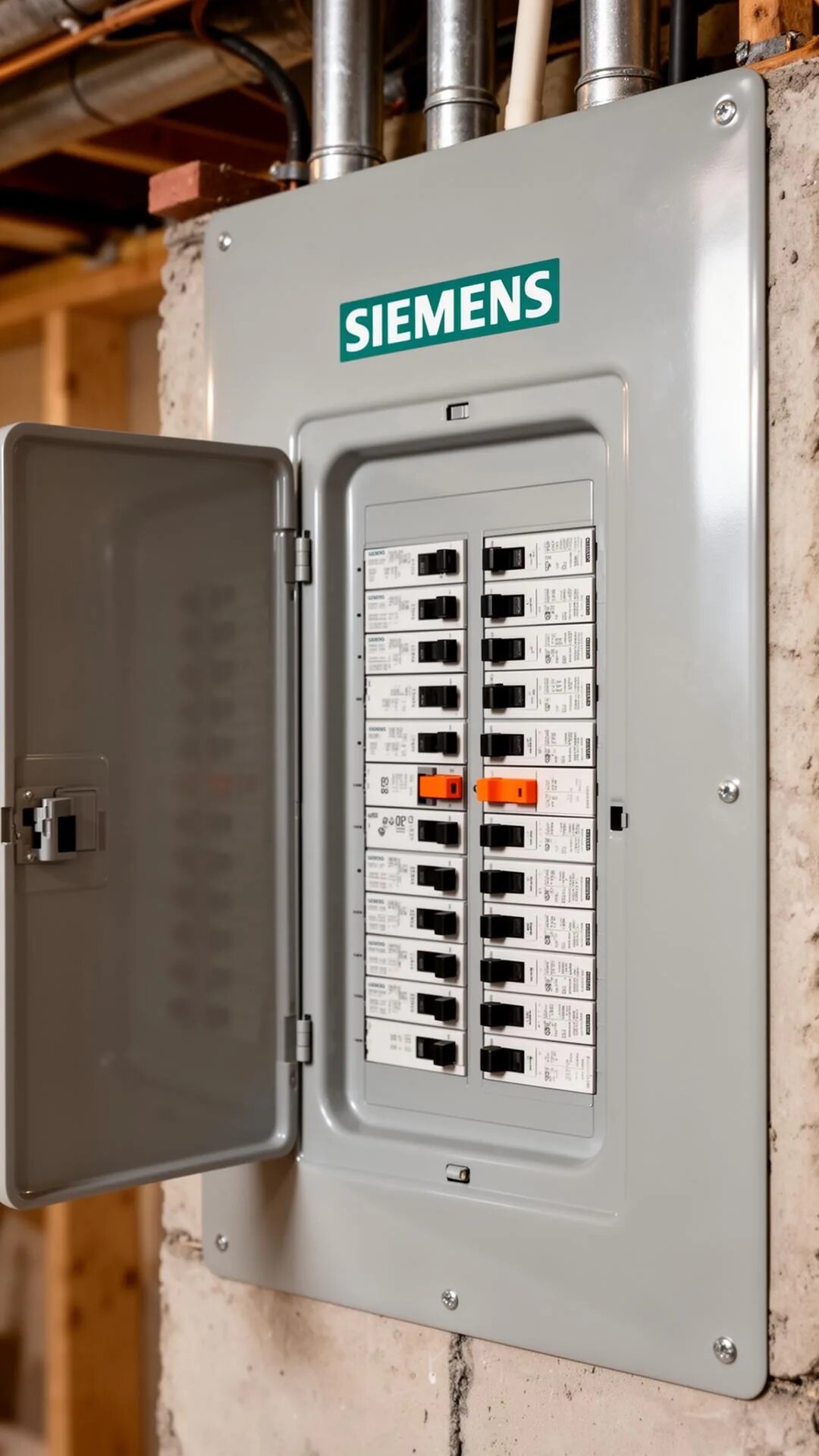
You're watching a movie in Timberlea, the microwave kicks on for popcorn, and suddenly half the basement goes dark. You walk to the panel, flip the breaker back, and ten minutes later it trips again. If that sounds familiar, you're not alone — "breaker keeps tripping" is the single most common service call we get across Fort McMurray, Anzac, and Saprae Creek.
I'm Mohammad, an Alberta-licensed Master Electrician (License #8368) and the owner of Crescent Electric. I've troubleshot a few thousand panels in Wood Buffalo — from 1970s split-level homes in Abasand to brand-new builds in Parsons Creek — and the causes almost always come down to five things. This guide walks through each one in plain English, tells you what's safe to check yourself, and explains when you genuinely need to stop and call a licensed electrician.
First, what a breaker actually does
A circuit breaker is a safety device, not a switch. Its only job is to cut power before the wire behind your drywall gets hot enough to start a fire. The Canadian Electrical Code (CSA C22.1) — the rule book every Alberta electrician works under — sizes breakers to the wire they protect, not to the appliance plugged in. A 15-amp breaker protects 14-gauge wire; a 20-amp breaker protects 12-gauge. If a breaker is tripping, the wire is being asked to carry more current than it was designed for, or current is escaping where it shouldn't. Treat every repeat trip as the breaker doing its job, not as a faulty breaker.
Why does my breaker keep tripping?
There are exactly five reasons a breaker trips. Walk through them in order — most Fort McMurray homes fall into reason #1 or #4.
1. Circuit overload — the #1 cause in Fort McMurray homes
An overload means the total draw on one circuit is higher than the breaker's rating. The CEC allows continuous loads up to 80% of breaker capacity (Rule 8-104), so a 15-amp circuit realistically tops out at 12 amps. A 1500-watt space heater on a 120-volt circuit pulls 12.5 amps by itself — which is why plugging a heater into a bedroom outlet that already runs lamps and a TV trips the breaker every time.
Common Fort McMurray overload culprits we see in winter:
- Portable heaters in basement suites and garages running alongside a freezer
- Block heaters and battery tenders sharing a garage circuit with a deep freeze
- Microwave + toaster + kettle on the same kitchen counter circuit (the CEC requires two 20A small-appliance circuits in kitchens for exactly this reason — older homes often have just one)
- Hot tubs wired to undersized branch circuits
Quick test: unplug everything on the affected circuit, reset the breaker, then add one device at a time. If the breaker holds until the third device comes on, you've found your overload. The fix is either load redistribution or a dedicated circuit — see our deep dive on overloaded circuits for the math.
2. Short circuit — when a hot wire touches neutral
A short circuit happens when the energized (black) conductor contacts the neutral (white) conductor directly. Current spikes into the thousands of amps almost instantly and the breaker snaps open in under a tenth of a second. You'll often hear a pop, see a spark, or smell something acrid.
Signs you're dealing with a short, not an overload:
- The breaker trips the moment you reset it, even with nothing plugged in
- Scorch marks on an outlet, switch, or appliance cord
- A burnt-plastic smell near a receptacle
Shorts are not a DIY repair. They mean damaged insulation somewhere inside the wall, a nicked wire in a junction box, or a failing appliance. Unplug everything, leave the breaker off, and call a licensed electrician. If you smell smoke, call 911 first.
3. Ground fault — current escaping to ground
A ground fault is similar to a short, but the hot wire contacts a grounded surface (metal box, plumbing, wet drywall) instead of the neutral. Bathrooms, kitchens, garages, exterior outlets, and anything within 1.5 m of a sink are required by CEC Rule 26-700 to be protected by a Ground Fault Circuit Interrupter (GFCI), which trips at just 5 milliamps — enough to save your life.
If a GFCI breaker or receptacle trips repeatedly, it usually means moisture has gotten into an outdoor outlet, a worn appliance cord is leaking current, or — extremely common in Fort McMurray — a heat-tape circuit on the eaves has cracked insulation after a few winters.
4. AFCI nuisance trips — the modern bedroom problem
Since 2015 the CEC has required Arc Fault Circuit Interrupters (AFCIs) on most 15A and 20A bedroom and living-area circuits. AFCIs detect the high-frequency signature of an arcing wire and trip before it ignites. They are excellent fire prevention — and they are also notorious for nuisance trips on older vacuums, treadmills, LED dimmers, and some power supplies.
If you have a newer home in Eagle Ridge, Stone Creek, or Parsons Creek and a single bedroom breaker keeps tripping, especially when a specific appliance is running, an AFCI nuisance trip is the likely cause. The fix is either swapping the offending appliance, replacing the AFCI with a compatible model from the same manufacturer (Siemens, Square D, Eaton), or — never — bypassing it with a standard breaker. Bypassing AFCI protection is a code violation and an insurance liability.
5. A worn or failing breaker
Breakers have a finite mechanical life. After roughly 5,000 to 10,000 trip cycles, or after 20–30 years in a humid panel, the internal bimetal strip weakens and the breaker trips at lower and lower currents. We see this constantly in original 1970s and 1980s Federal Pacific Stab-Lok and Zinsco panels still in service around Beacon Hill and Thickwood — both panel brands have well-documented failure histories and most insurers now require replacement at the next renewal.
If a single breaker trips with no load on the circuit and a thermal-imaging check shows the breaker itself running hotter than its neighbours, it has failed and needs to be replaced with a matching Siemens, Eaton, or Square D unit. Cross-branding breakers into a panel is not legal under CEC Rule 2-024.
Does Fort McMurray's winter make tripping worse?
Yes, in two distinct ways. First, peak winter load: when the outdoor temperature drops below -30 °C, every house in Wood Buffalo is simultaneously running block heaters, in-floor heat, baseboard heaters, and engine warmers. The total household draw can double between October and January, which pushes already marginal circuits over the edge.
Second, panel temperature swings. Garages and unheated mechanical rooms can sit at -20 °C overnight and warm to +5 °C during the day. That thermal cycling tightens and loosens lug connections inside the panel, which raises resistance and heats up under load — sometimes enough to trip a perfectly healthy breaker. Anyone whose panel lives in a cold garage should have those torque-checked annually. See our winter electrical safety guide for the full pre-season checklist.
What can I safely check myself?
Three things, in this order:
- Unplug everything on the affected circuit, reset the breaker, and add devices back one at a time. This isolates an overload in under five minutes.
- Test GFCI receptacles by pressing the TEST button monthly. If the RESET button won't latch, the GFCI is at end of life and needs replacement — they're rated for roughly 10 years.
- Listen and smell at the panel. A faint hum is normal. A buzzing breaker, a scorched smell, or warm panel cover are all reasons to call us the same day.
What you should never do: replace a tripping breaker with a higher-amperage one, double-tap two wires onto one breaker, or "jump" an AFCI. Each of these is a CEC violation under Section 0 (general requirements) and can void both your home insurance and the warranty on any appliance damaged downstream. Section 8 of Alberta's Safety Codes Act requires that all permanent electrical work in Wood Buffalo be performed by a certified contractor and inspected.
When should I call a Fort McMurray electrician?
Call the same day if any of these are true:
- The breaker trips immediately when you reset it, with nothing plugged in
- You smell burning plastic, see scorch marks, or the panel feels warm to the touch
- A GFCI or AFCI trips repeatedly and won't reset
- Lights dim or flicker at the same time the breaker trips (see why your lights flicker)
- Your home still has a Federal Pacific Stab-Lok, Zinsco, or original aluminum-wired panel (read why this matters)
Diagnostic scope and duration depend on the fault; an electrician confirms the appropriate checks. If the underlying issue is a panel that's simply out of capacity for a modern home — common in any house built before 2005 — we'll walk you through the options in our panel upgrade guide before quoting anything.
How much does it cost to fix a tripping breaker?
A straightforward diagnostic visit in Fort McMurray sits in the $150–$250 range and covers up to one hour of troubleshooting. Replacing a single breaker with a matching Siemens or Eaton unit usually runs $180–$320 installed. A new dedicated 20-amp kitchen or garage circuit is typically $450–$900 depending on drywall access. A full 100A-to-200A panel upgrade — the right call for many 1980s homes — runs $2,800–$4,500 with permit and inspection included. See how electrical upgrades affect home value for ROI numbers.
Is it safe to keep resetting a tripping breaker?
No. Resetting a breaker that has just tripped is fine once. Resetting it three, four, five times in a row is how electrical fires start. Each reset under fault conditions arcs the contacts inside the breaker, degrades the trip mechanism, and stresses the wire it's protecting. If a breaker won't stay set after one careful reset attempt, leave it off and call a licensed electrician.
Frequently Asked Questions
Why does my breaker only trip when it is -30 °C outside in Fort McMurray?
Cold snaps push every heat-related load in your home to maximum at the same time — furnace blower, block heaters, heat-trace cable on the eaves, basement space heaters, and the hot water tank all run longer cycles. On older 100-amp services in Timberlea, Thickwood, and Beacon Hill, the breaker protecting the kitchen, garage, or laundry circuit is usually the first to give out because it is sharing a leg with one of those heating loads. The breaker is doing its job — it is telling you the circuit is over its safe continuous-load rating under CEC Rule 8-104. A licensed electrician can rebalance the panel, add a dedicated circuit, or recommend a 200-amp upgrade if the whole service is at its limit.
Can I just swap a 15-amp breaker for a 20-amp to stop the tripping?
No — and this is the single most dangerous mistake I see in Fort McMurray homes. The breaker size is matched to the wire gauge feeding the circuit. A 15-amp breaker protects 14-gauge wire; a 20-amp breaker requires 12-gauge. Installing a larger breaker on undersized wire lets the wire heat up past its insulation rating before the breaker trips, which is exactly how electrical fires start inside walls. It also violates the Canadian Electrical Code and voids your home insurance. If a 15-amp circuit keeps tripping, the right fix is to move loads off it or add a dedicated 20-amp circuit on properly sized wire — not to upsize the breaker.
How do I know if it is the breaker itself that has failed versus a real circuit problem?
A failed breaker usually trips with little or no load on the circuit, feels noticeably warmer than its neighbours, or will not reset to the full ON position even with everything unplugged. A real circuit problem (overload, short, or ground fault) trips reliably when a specific appliance runs or a specific outlet is used. We diagnose this with an infrared thermal scan of the panel plus a clamp-meter reading on each circuit — an assessment to identify the likely cause. Federal Pacific Stab-Lok and Zinsco panels, common in Fort McMurray homes built before 1990, fail this test often enough that we recommend replacement on sight rather than swapping individual breakers.
About the author
Mohammad is an Alberta-licensed Master Electrician (License #8368) and the owner of Crescent Electric, serving Fort McMurray, Anzac, Saprae Creek, Fort McKay, and the surrounding Wood Buffalo region. He holds a Red Seal Construction Electrician certification and has 12+ years of residential, commercial, and oil-sands experience. Crescent Electric is fully licensed, bonded, and insured under the Alberta Safety Codes Act. Need a panel diagnosed? Book a same-day visit or call (587) 557-5494.
